

Is MEDDIC a Sales Methodology?
- Avner Baruch
- Apr 25
- 2 min read

Throughout my career as a sales enablement leader and trainer, I have rolled out Sandler, Challenger, MEDDIC, ANUM, BANT, Value Selling and, in recent years, Gap Selling.
I respect and admire each one of these tools, frameworks and methodologies.
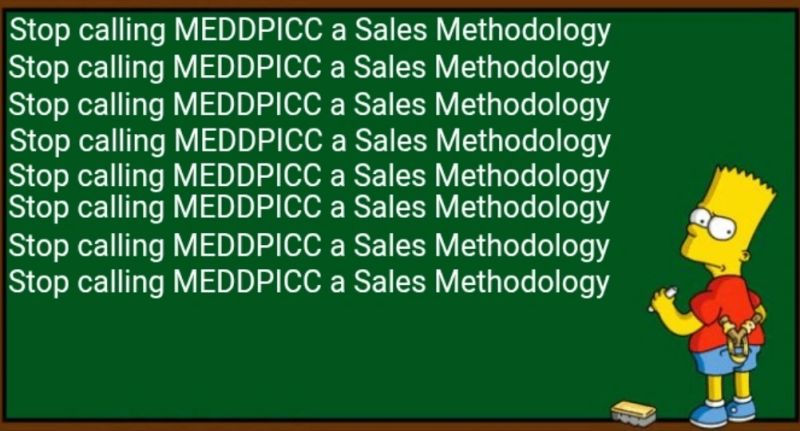
This is also why I strongly believe MEDDIC is not a methodology.
In most cases, based on what I have witnessed, it serves as a safety net for first-line managers who are looking for control, consistency and visibility in preliminary buyer-seller engagements.
The problem is that the outcome is often the complete opposite.
Sales velocity decreases.
Collected data remains data.
Insights are not leveraged to improve performance.
And the punchline?
By the time you finally decide what to do with the data, the data is no longer valid.
I have no intention of letting the air out of the tires of those who make a living delivering MEDDIC workshops. I respect sales trainers, especially in today’s economic climate.
But I do believe it is vital to see things in perspective, especially for GTM builders who are now designing reinforcement systems with agentic automation, Salesforce rules, or any other operating layer meant to bring discipline into the sales motion.
MEDDIC, and its similar flavors and colors, were designed for an era where things moved slower, with a bit more certainty and a longer runway for decision-making.
I do believe MEDDIC has value as a cross-functional checkpoint system, helping reps document signals as the deal progresses and moves downstream to the expansion team. Ideally, these signals should be captured automatically, not forced through manual interrogation.
But when MEDDIC becomes a preflight checklist, this is where things start to go wrong.
Given today’s tech landscape, build-or-buy is probably one of the biggest challenges for both buyers and sellers.
Economic buyer.
Timeline.
Authority.
Decision criteria.
Paperwork.
Fair questions indeed.
But not for the first date.
The most important question sellers need to focus on is:
Why?
Why are they looking for a solution?
Why are they looking at your solution?
Why are they even considering buying a solution when so many companies in their position are trying to build their own internal alternatives?
Why now?
This set of questions can easily consume fifteen minutes.
And the impact of asking these questions instead of rushing into, ‘Who is your economic buyer?’, goes far beyond collecting valuable data.
It positions the seller as a domain expert.
Someone the buyer can actually consult with.
Someone who creates value in the conversation, instead of triggering that familiar and uncomfortable feeling:
‘Not again. Another inexperienced seller with another checklist’.
Avner Baruch Founder, Author Project Moneyball


Comments